Where a single operator holds both the stamp and the airspace authorization, the post-fire reconstruction of one of America’s most valuable coastlines becomes a defensible engineering market — not a commodity drone service.

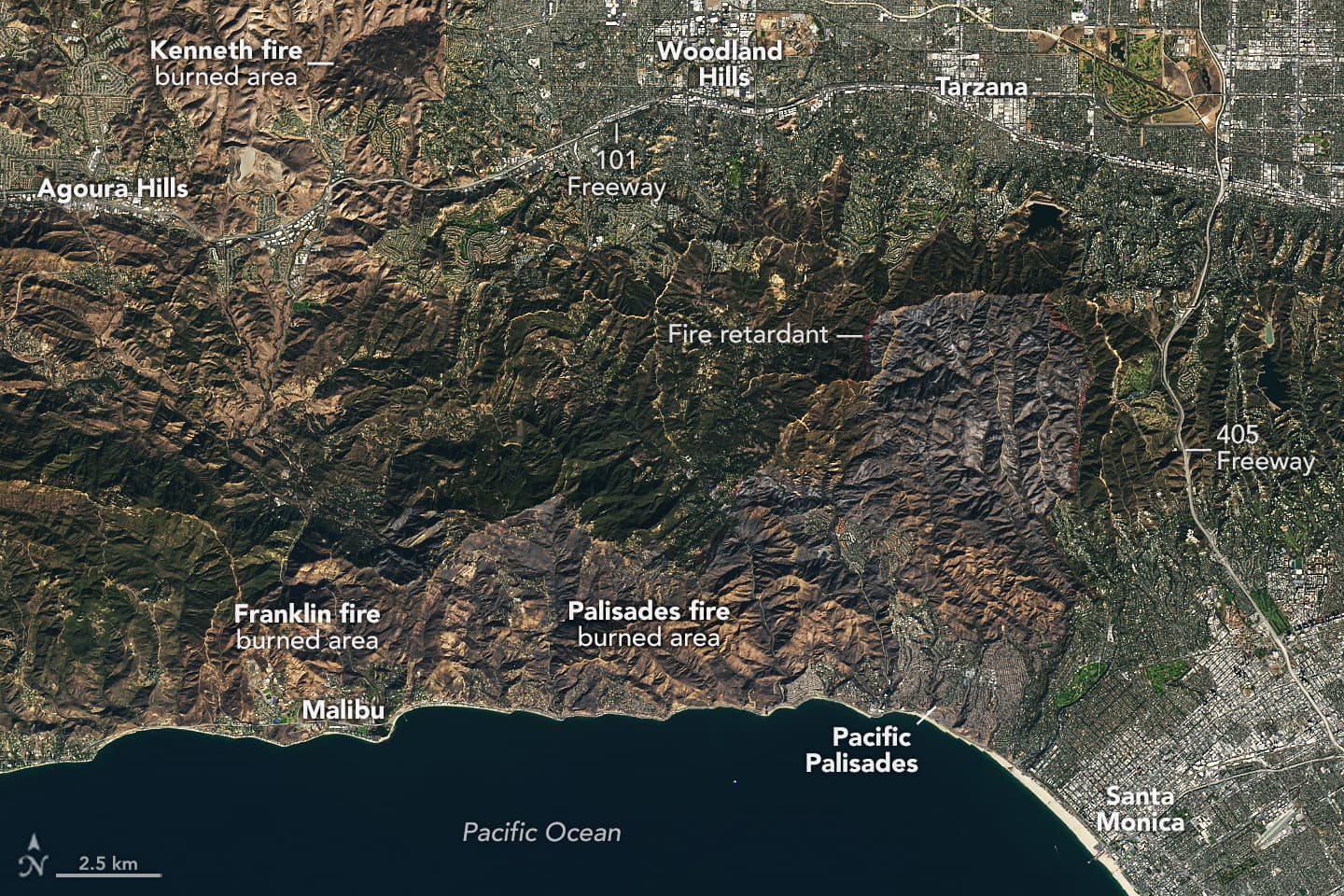
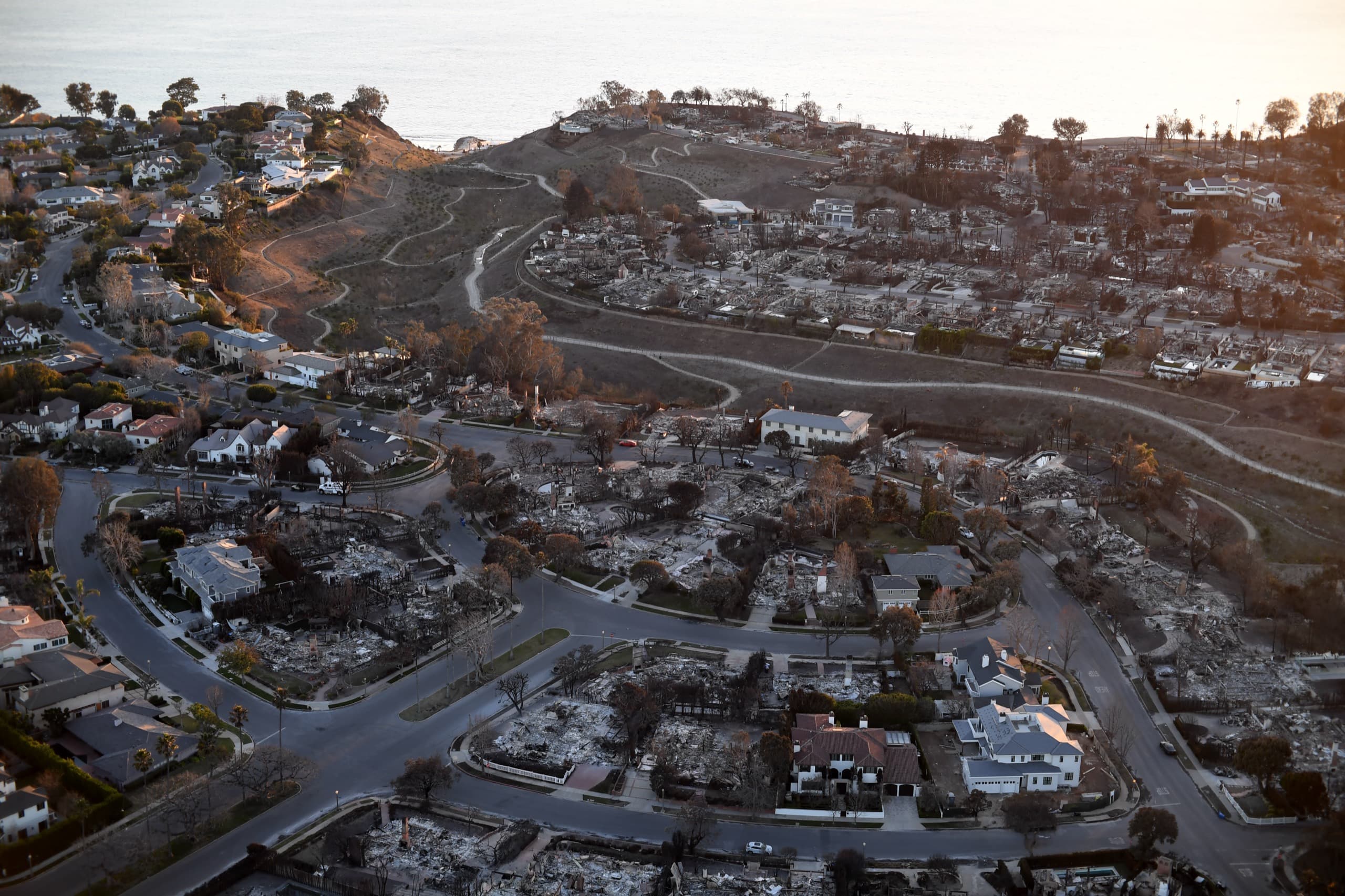
The January 2025 Palisades Fire destroyed more than 6,800 structures and burned over half of the corridor’s slope area at moderate-to-high severity,1,2 opening a 24–36 month reconstruction window across some of the highest-value terrain in the United States. This thesis argues that the convergence of two credentials — a post-1982 California civil engineering license and an FAA Part 107 remote pilot certificate — creates a durable, defensible market position that neither surveyors nor commodity drone operators can occupy alone.
Drone-derived photogrammetry and LiDAR collapse the cost and schedule of engineering-grade topography by 40–70%,7while the engineer’s stamp converts raw point clouds into liable, permit-ready deliverables. Layered over a corridor of overlapping airspace and jurisdictional constraints,5,6these barriers thin the field of qualified competitors rather than the operator’s own opportunity — and position the dual-credentialed engineer-pilot to capture recurring, high-margin revenue throughout the reconstruction.
A single dual-credentialed operator can convert one of America's most valuable coastlines, mid-reconstruction, into a defensible engineering market.
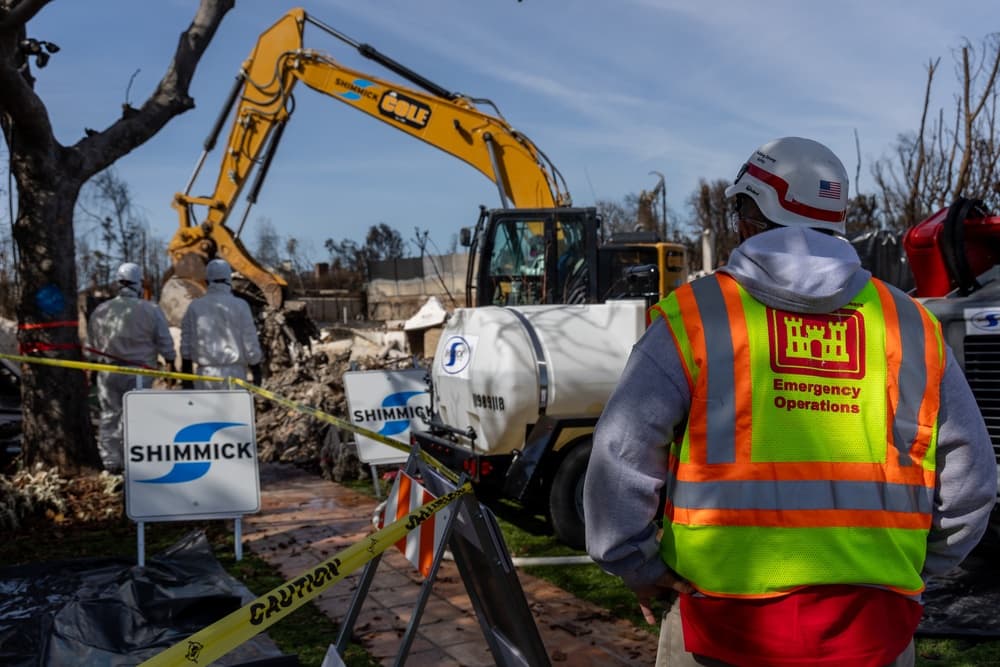
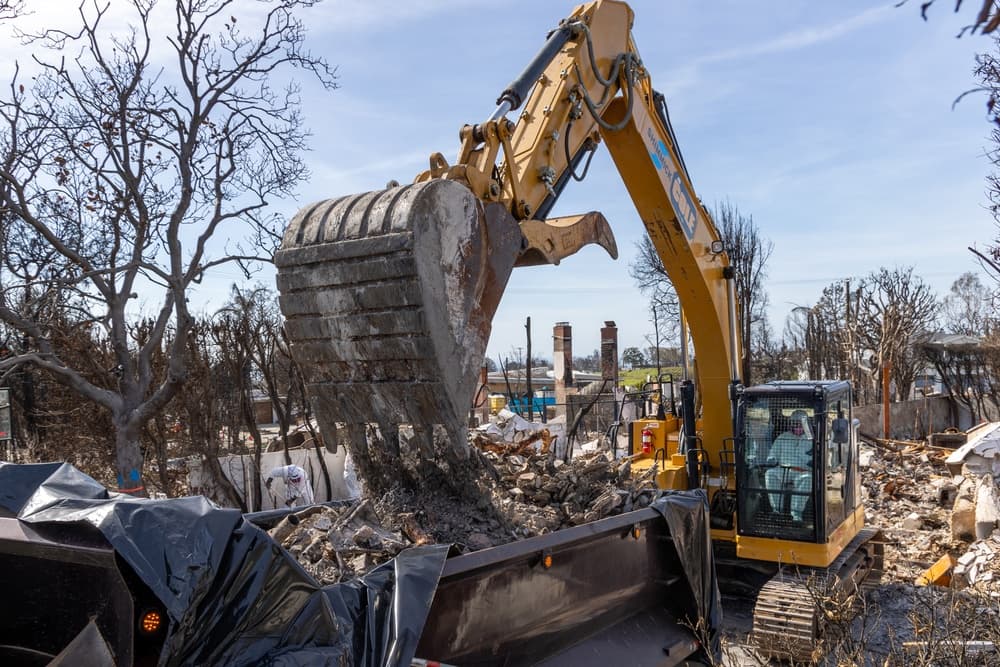
On January 7, 2025 the Palisades Fire destroyed more than 6,800 structuresand burned over half of the corridor’s slope area at moderate-to-high severity.1,2 Debris removal — the fastest post-disaster clearance in California history at roughly six months — has already given way to permits, grading, and vertical reconstruction across Malibu and Pacific Palisades. The result is a finite, high-value window in which engineering-grade spatial data is needed at scale.

The thesis is narrow and defensible: the operator who holds both a post-1982 California civil engineering license andan FAA Part 107 remote pilot certificate occupies a position that neither a land surveyor nor a commodity drone pilot can reach. Drones collect the data; the engineer’s stamp makes it liable and permit-ready.
The corridor isn't just high-value — under California hillside-grading law, engineered civil deliverables are required on nearly every rebuilt lot, making the addressable demand structural rather than speculative.
The Palisades Fire destroyed 6,837 structures across roughly 37 square miles; across both 2025 Los Angeles fires, some 13,000 homes were lost.9 Insured losses exceed $20 billion and total economic losses may reach $50 billion, against a pre-fire median Palisades home of $2.9M–$3.8M.
The demand multiplier is regulatory. LAMC §91.7004classifies all grading within a designated Hillside Area as “engineered grading” regardless of volume, and virtually all of Pacific Palisades is a designated Hillside Area.6 Essentially every rebuild involving grading therefore requires an engineered grading plan, soils and geology reports, and professional inspection.
Palisades Fire footprint
Virtually all of Pacific Palisades is a designated Hillside Area
LAMC §91.7004: all Hillside-Area grading is “engineered grading” regardless of volume
Illustrative SOM. Illustrative SOM: stamped topo + cut/fill at ~$2,500–$4,000 per lot across thousands of rebuilt lots implies a multi-million-dollar addressable niche, before recurring monitoring retainers.
The boundary between what a civil engineer may stamp and what requires a land surveyor is the moat — and it falls almost entirely in the engineer's favor.
California’s Professional Land Surveyors’ Act draws a bright line between engineering and survey deliverables. A civil engineer licensed after 1982 — license number C33966 or higher4 — may independently stamp topographic mapping, photogrammetry, and volumetric work, but may not perform boundary work.
*All CEs may perform geotechnical/soils work regardless of date.
The strategic implication: sell the green column relentlessly and partner out the amber column. Every deliverable on the left can be flown, processed, and sealed by one person; everything on the right is better handled by referral — a relationship that itself becomes a source of inbound work.
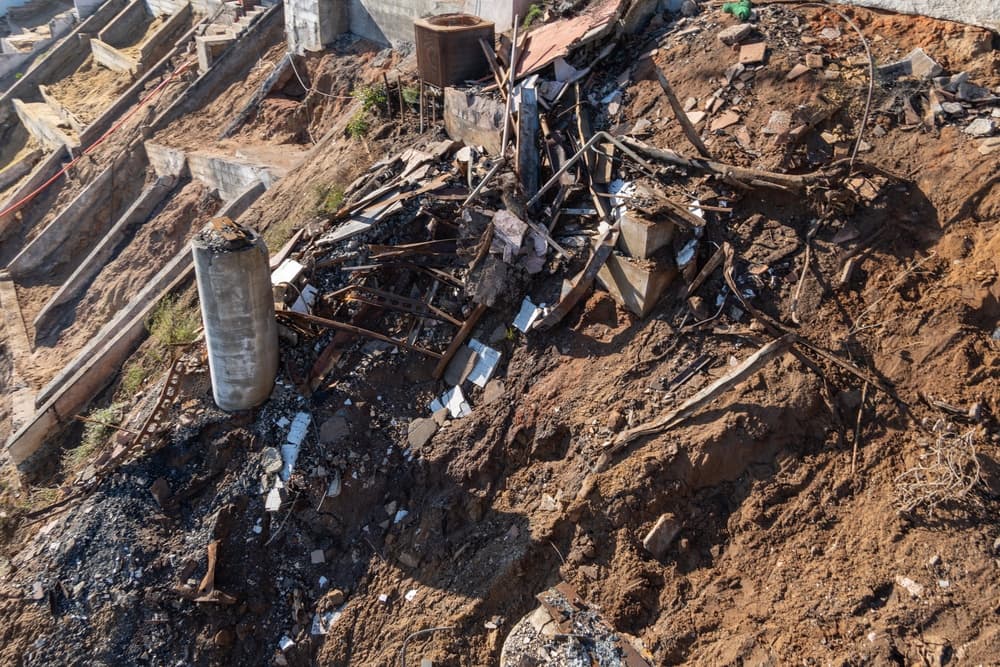
Burned slopes above rebuilt homes create a recurring, storm-driven demand for engineer-stamped change detection — the highest-margin niche in the corridor.

The deliverable is a closed loop. A baseline flight establishes the reference surface; storm-triggered re-flights are co-registered against it; differencing the point clouds quantifies displacement; and the engineer’s stamp turns the result into a hazard report — recurring revenue, not one-off fees.
Hillside rebuilds need cut-fill topography fast and cheap — but the durable margin lives in the stamp, not the flight.
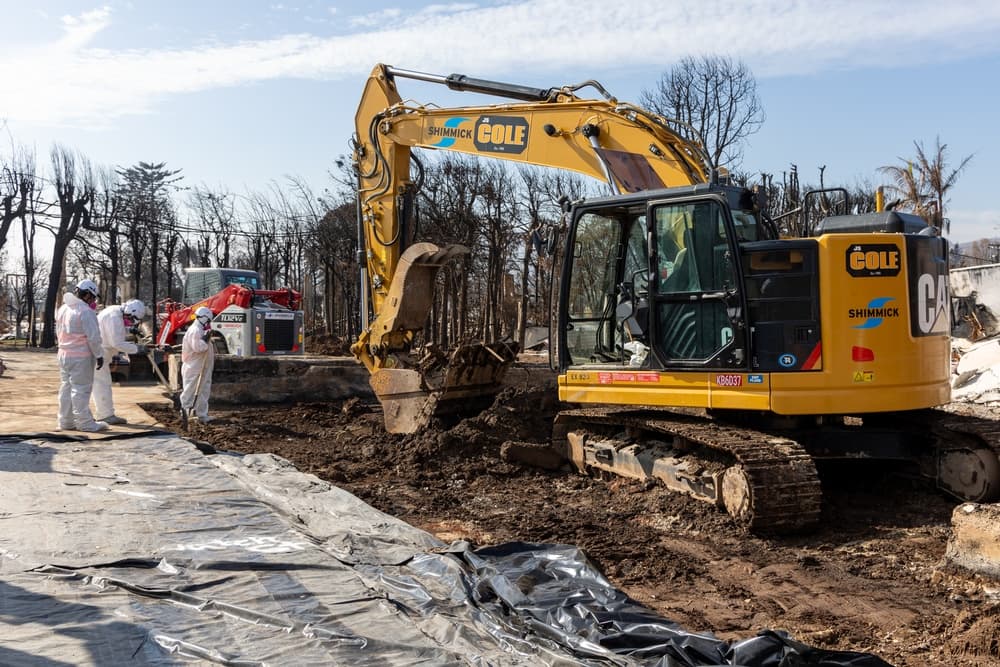
The reconstruction’s volume engine is hillside earthwork: topographic surveys, cut-and-fill volumetrics, and monthly progress monitoring across hundreds of rebuilds. These are engineering deliverables — squarely inside the solo-stamp column — billing on well-established rates, with coastal-LA work at or above the top of every range.7

A representative 50-acre topographic survey runs $5,000–$14,000 by drone versus $15,000–$40,000 with a ground crew — a 40–70% saving delivered in days rather than weeks.7
Caltrans' emergency PCH program is a multi-year pipeline of high-ticket, monitoring-hungry public projects.
Caltrans District 7 is running 8+ active Emergency Director’s Orders on Pacific Coast Highway between Sunset Boulevard and Temescal Canyon,3 with named projects scheduled into 2029 — slow, high-ticket, monitoring-intensive engagements.

The largest line item — a $57.9M drainage, fish-passage, and culvert program completing in 20293 — alone implies years of as-built surveys, progress documentation, and change-order support.
The corridor's stacked airspace and jurisdictional bans are not obstacles to the credentialed operator — they are the barrier that thins the field.
The corridor is wrapped in overlapping airspace and ground constraints: the LAX Class B shelf descends to roughly 5,000 feet, Santa Monica’s Class D adds a second controlled layer, and the ground below is a patchwork of NPS, MRCA, State Parks, and municipal permit regimes, punctuated by wildfire TFRs.5,6Nearly every commercial flight requires LAANC authorization, available only to Part 107 holders.
Forward-looking; status verified mid-2026 and still pending.
A 2017 FAA consent decree closes KSMO at the end of 2028 (reaffirmed Sept 2025), lifting the Class D layer over the eastern Palisades.
Beyond-visual-line-of-sight rulemaking would enable automated-dock repeat monitoring — a moat multiplier for the recurring-monitoring niche. Final rule still pending as of mid-2026.
Emergency-scene drone penalties (up to $75,000) with an explicit exemption for FAA Part 107 waiver holders — a barrier to casual operators, not to the credentialed pilot.
The field splits into drone shops that can't stamp and engineering firms that don't fly; the engineer-pilot positioned on post-fire geohazard occupies an open quadrant.
The local market is mostly pure-drone shops that position as data vendors to engineers and cannot stamp deliverables. The one integrated local firm is surveyor-led and not positioned on post-fire geohazard. Traditional civil and geotech firms hold the stamp but outsource the flight.
The intersection — engineer-credentialed, drone-native, and geohazard-positioned — is unoccupied. That open quadrant is the entire strategic premise of this analysis.
Sequence the niches by competition and urgency, then sell to buyers ranked by how fast they close.
The corridor offers three niches, sequenced rather than pursued at once. Plotting them by competitive intensity against revenue quality and urgency makes the entry order obvious: lead where competition is weakest and urgency highest.
Within each niche, buyers differ sharply in how fast they close. Fund the practice on fast-closing buyers while seeding the slow, high-ticket relationships in parallel.
Thousands of homeowners remain in active scope-of-loss disputes in 2026, and Coastal Zone review keeps driving appeals. Engineer-certified, timestamped, georeferenced 3D documentation is evidence-grade for either side of a claim — a lane with near-zero qualified local supply.
The full US-average rate card underlying the figures in Chapter 5, with local LA validation points.
| Deliverable | Low | High | Basis |
|---|---|---|---|
| Photogrammetry topo | $150 | $300 | /acre |
| LiDAR engineering-grade topo | $400 | $500 | /acre |
| Volumetric / cut-fill add-on | $200 | $600 | add-on |
| Certified / stamped report | $500 | $3,000 | add-on |
| Monthly progress visit | $1,750 | $2,200 | /visit (recurring) |
| GCP setup | $300 | $800 | /project |
Small-site flat photogrammetry: $1,500–$3,000 · LiDAR field rate: ~$1,500–$3,000/day · Rush (same-week): +20–50%
The end-to-end pipeline from airframe to stamped CAD deliverable.
Methodology & limitations: figures are drawn from public USGS, Caltrans D7, FAA, CA BPELSG, and LADBS / LA County sources and 2026 industry pricing benchmarks (cited in References). Market-sizing estimates (SOM, demand funnel) are explicitly illustrative. Forward-looking regulatory items (KSMO closure, FAA Part 108, AB 1749) reflect status verified in mid-2026 and remain pending.
Dual-credentialed civil engineer and FAA-certificated remote pilot focused on post-fire geohazard monitoring, hillside earthwork topography, and engineered-grading deliverables across the Malibu–Pacific Palisades corridor.
[Verifiable proof point — e.g., representative stamped deliverable, agency engagement, or publication — to be provided.]
Geohazard monitoring, hillside earthwork topography, and infrastructure progress surveys — flown, processed, and sealed by a single dual-credentialed engineer-pilot.